
Work with Meeting Artist, Emily Kaye
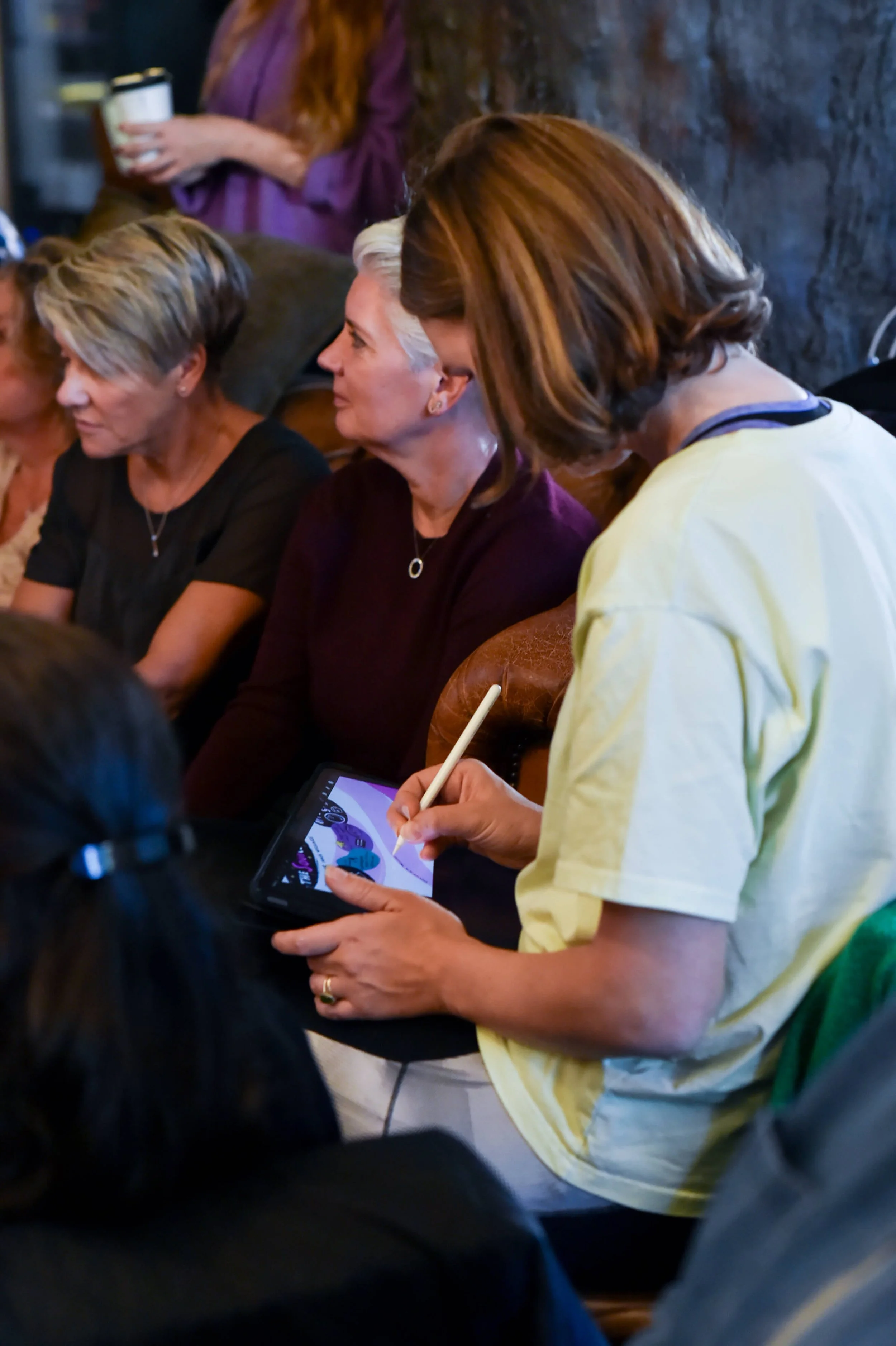
As a meeting artist, I capture discussions, ideas and key decisions as they happen, transforming them into colourful illustrated summaries minutes that capture the highlights of your meeting.
I attend as an impartial observer, listening in to the conversation and noting down the key themes and messages discussed in an accessible visual summary.
What does a meeting artist do?
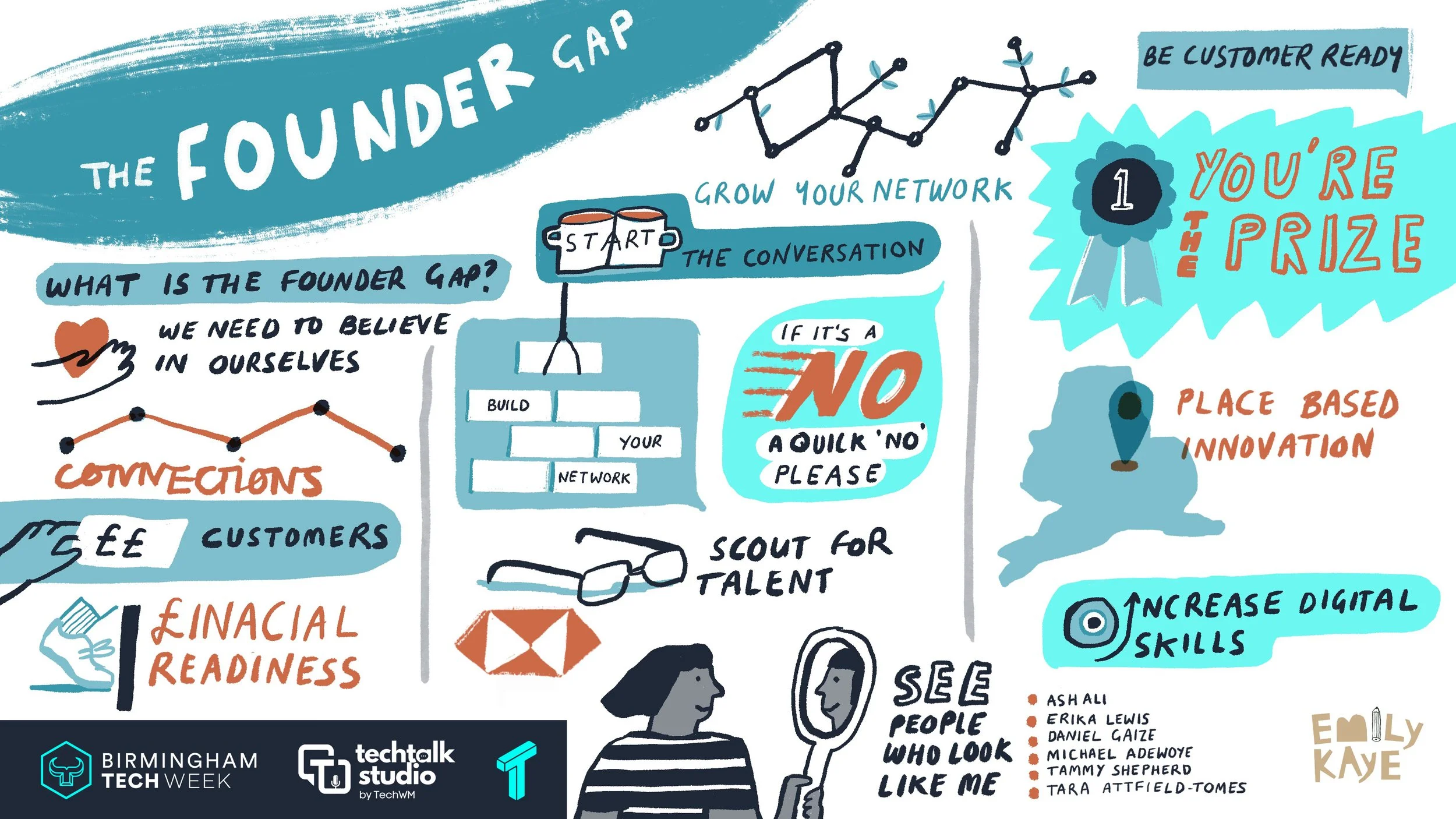
Meeting art is similar to graphic recording, or live illustration. As a meeting artist, I capture spoken information as images and words. The final image acts as a visual reminder of the conversation, much like meeting minutes. The use of images help make the information more accessible, memorable and easy to share.
Before becoming an artist, I worked in the corporate world as a design engineer for companies like Dyson, so I've experienced plenty of meetings where everyone leaves feeling energised and decisive… only to realise that the key moments are scattered across individual notebooks, scribbled on flipcharts or buried in pages of meeting minutes that nobody really wants to read.
Sure, we now have AI tools that can listen in and summarise meetings for us, but these bring their own questions around privacy, data security and environmental impact.
My USP is I’m human.
As a meeting artist, I listen to your meeting and capture the key themes, ideas and outcomes in a colourful visual summary combining words and illustrations. Something your team can actually enjoy looking at, refer back to and share long after the meeting has finished. You can talk to me too and I’ll make sure to capture the most prevalent topics. I’ll use your brand colours and logos too.
Your illustrated meeting images can be used in presentations, printed as posters, shared in newsletters or circulated by email, helping everyone stay connected to the conversation.
If you think about places we see information - museums, dentists, doctors, train stations…. people are much more likely to read information that combines text and image in bite size chunks rather than big blocks of text.
Meeting artists use visual hierarchy to help viewers access information in an accessible way. When we see blocks of text, there is no hierarchy - in fact with text all the same size, it is all fighting for attention equally, and none of it wins. Using visual summaries can help people remember what was discussed and feel more connected to the decisions being made.
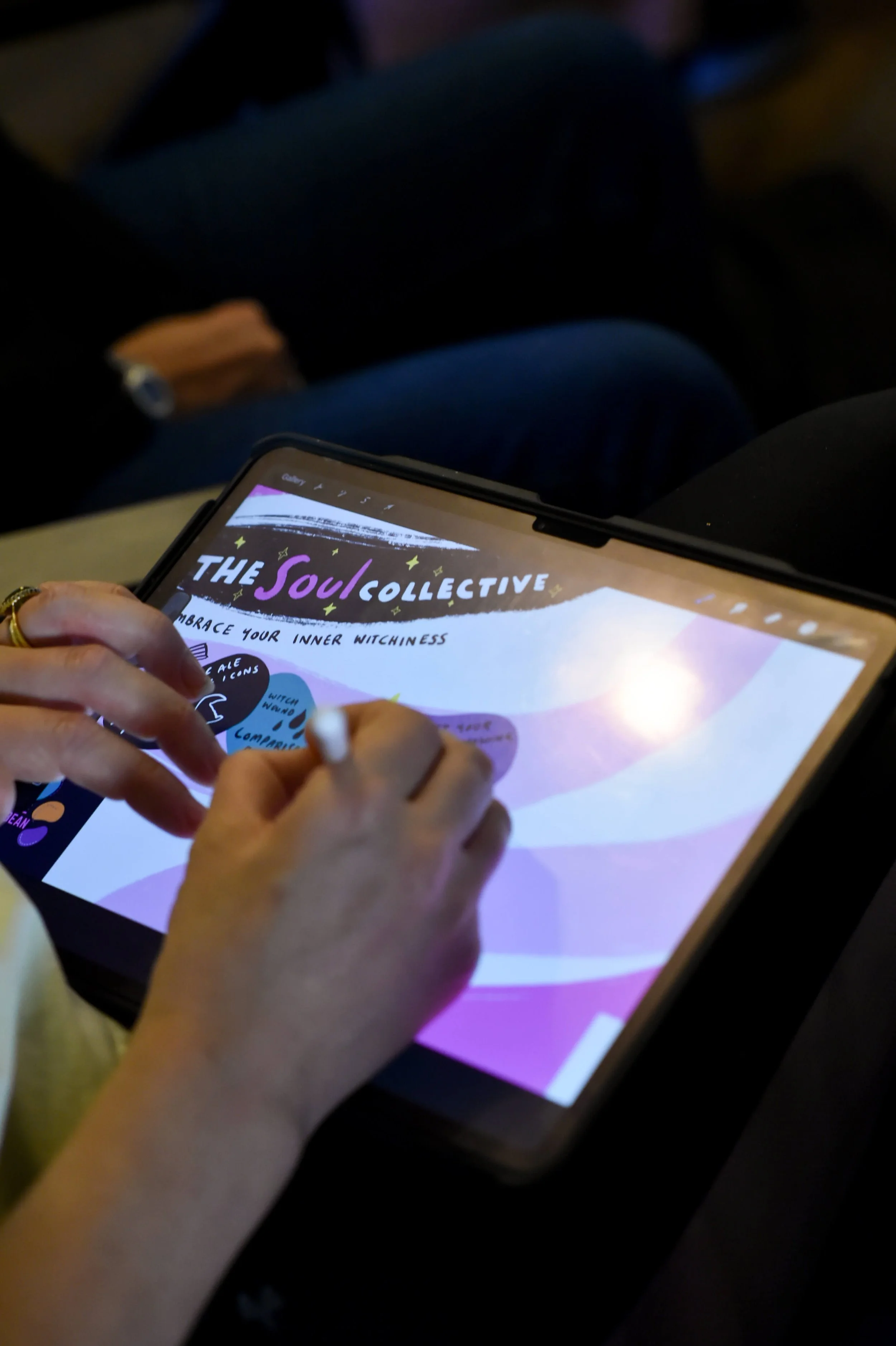
Photos courtesy of Ana Frantz Photography
How does a meeting artist work?
Before your meeting
I’ll schedule a Zoom call. We can cover your goals, aims, setup arrangements and what you’d like to achieve with the finished artwork. An agenda and attendee list will be super helpful in advance.
On the day
I work digitally and will come prepared with my setup. I can be in view or out of sight. It is also possible to live cast the images as they unfold. Whichever works best for you. If needed, the drawings can be shared immediately.
After the meeting
I’ll always ask you for feedback to ensure the accuracy of all information captured. Unless they’re needed immediately I’ll take the drawings away to tweak and send you your high resolution files and time-lapse within 24-48 hours.
Ready to Hire a Meeting artist?
I'm based in Warwickshire, working across Birmingham, Northampton, the wider Midlands and beyond. I'm just 1.5 hours from London and happy to travel across the UK. I can also join your meeting remotely!
I'd love to help you capture your next meeting, workshop or conversation through visual meeting images. Get in touch and tell me a little about your meeting, including the date, location and what you'd like to capture, and I'll be happy to put together a quote.
Meeting art has sister services for events, conferences, talks and panels. These are sometimes called live illustration, or visual note-taking.
These terms are very much interchangeable. In a nutshell we capture conversations and ideas through drawing as they happen. Making pictorial summaries that accessible and help viewers re-visit, remember or learn key information.
✱ make key information accessible
✱ visual summaries for reports
✱ share information with people who couldn’t attend
✱ make complex ideas accessible
✱ share ideas with the wider public
✱ use images in campaigns, on social media or reports
✱ make notes easy and enjoyable to remember
✱ share images with stakeholders and investors