
The Digital Good application
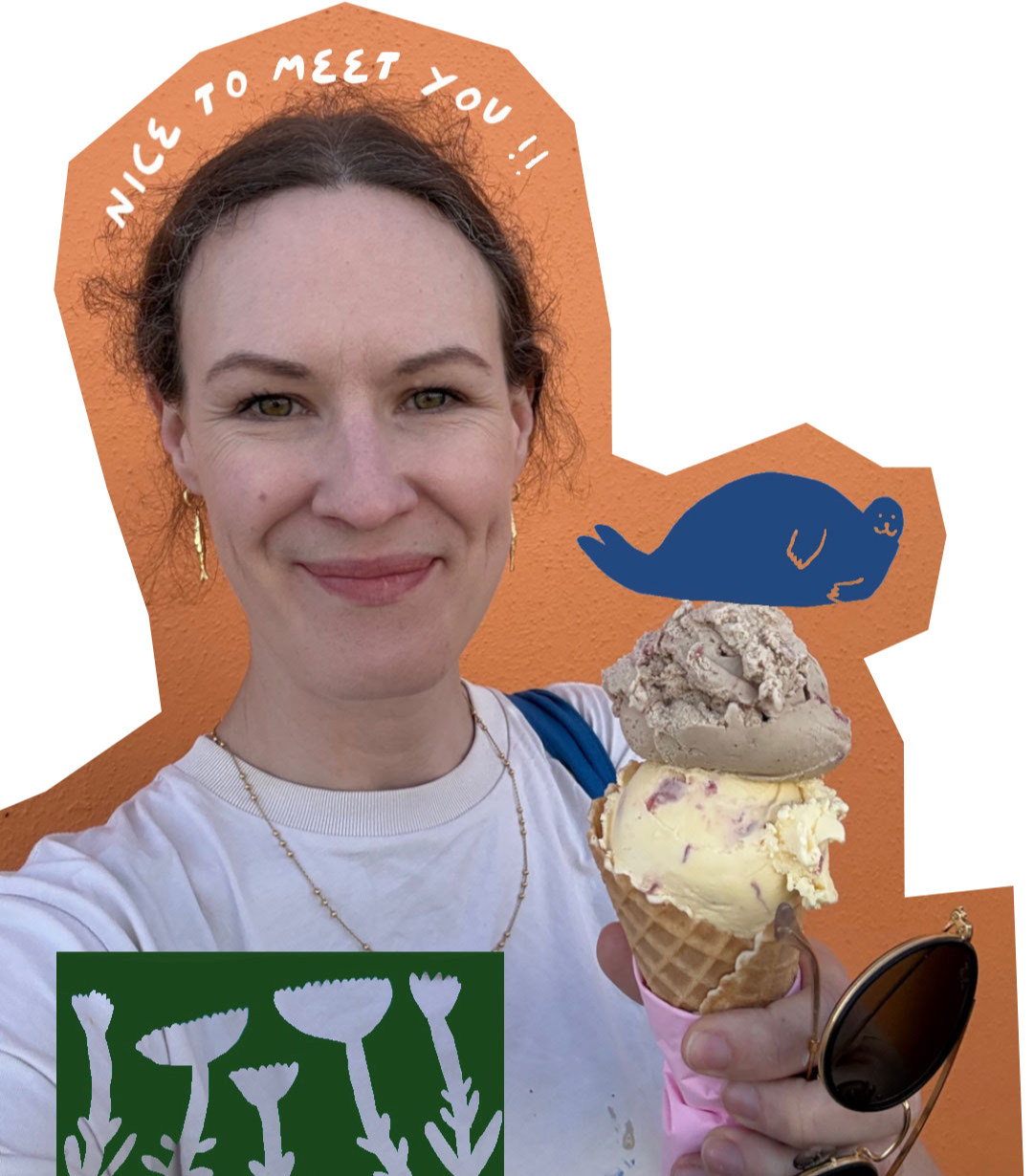
hi, I’m Emily
I’m an illustrator and mural artist. My work is inspired by people, place and the stories that connect them. I create colourful, uplifting artwork that encourages curiosity, discovery, conversation and a sense of belonging.
The Commission I’ve been searching For
My Digital Background
Have you ever read something and felt like it was speaking directly to you? That's how I felt reading The Digital Good artist brief.
I grew up alongside technology. I researched school projects on Encarta 95 before moving on to Asking Jeeves, and by the age of 11 I was creating worksheets in MS Word for my mum's primary school class to fill in (for extra pocket money (win-win)). I also remember watching her confidence diminish when her handwritten school reports were phased out and became digital Word docs she painstakingly typed.
I studied product design before working 8 years as an engineer at Dyson and Cambridge Consultants, developing products in SolidWorks and ProEngineer CAD, combining drawing with technology. Eventually, the drawing disappeared so I left engineering to pursue illustration.
Today I tell clients, "I'm an artist who's not afraid of a spreadsheet." I create illustrated maps, museum resources, packaging, murals for charity campaigns and public art for hospitals. All combining analogue and digital mediums.
Alongside my practice, I work two days a week as a Digital Skills Technician at the University of Northampton, helping illustration and graphics students manage their file sizes, and transform hand-drawn ideas into digital outcomes such as book jackets, zines and comics. I also support older adults in building confidence with technology, including one-to-one iPad and iPhone tuition for a woman living with Parkinson's.
ART
My work typically centres around the use of characters and environment, built together into scenes to create a narrative. With complex issues I employ the use of scale, texture & visual metaphor to embed emotion and impact into an image. The characters I create allow for a diverse audience to feel represented and included whilst also inviting people to picture themselves in a scene.
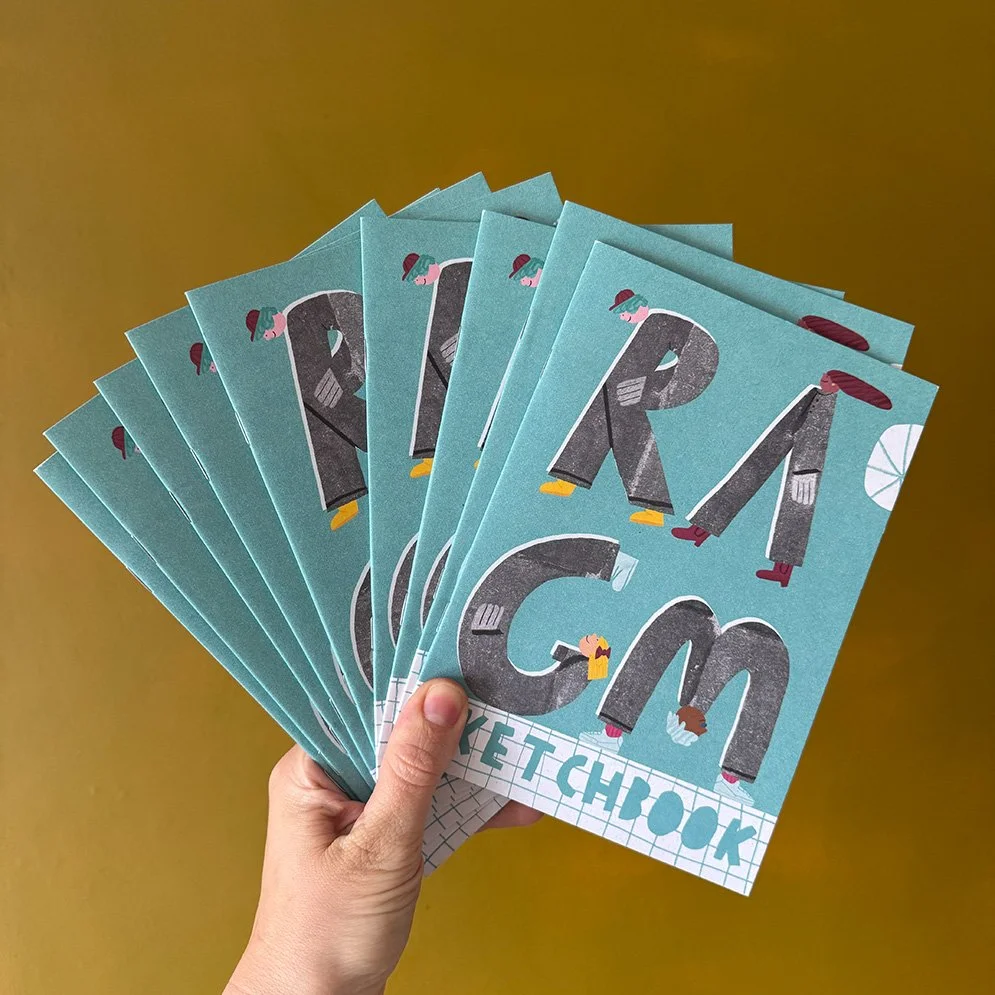
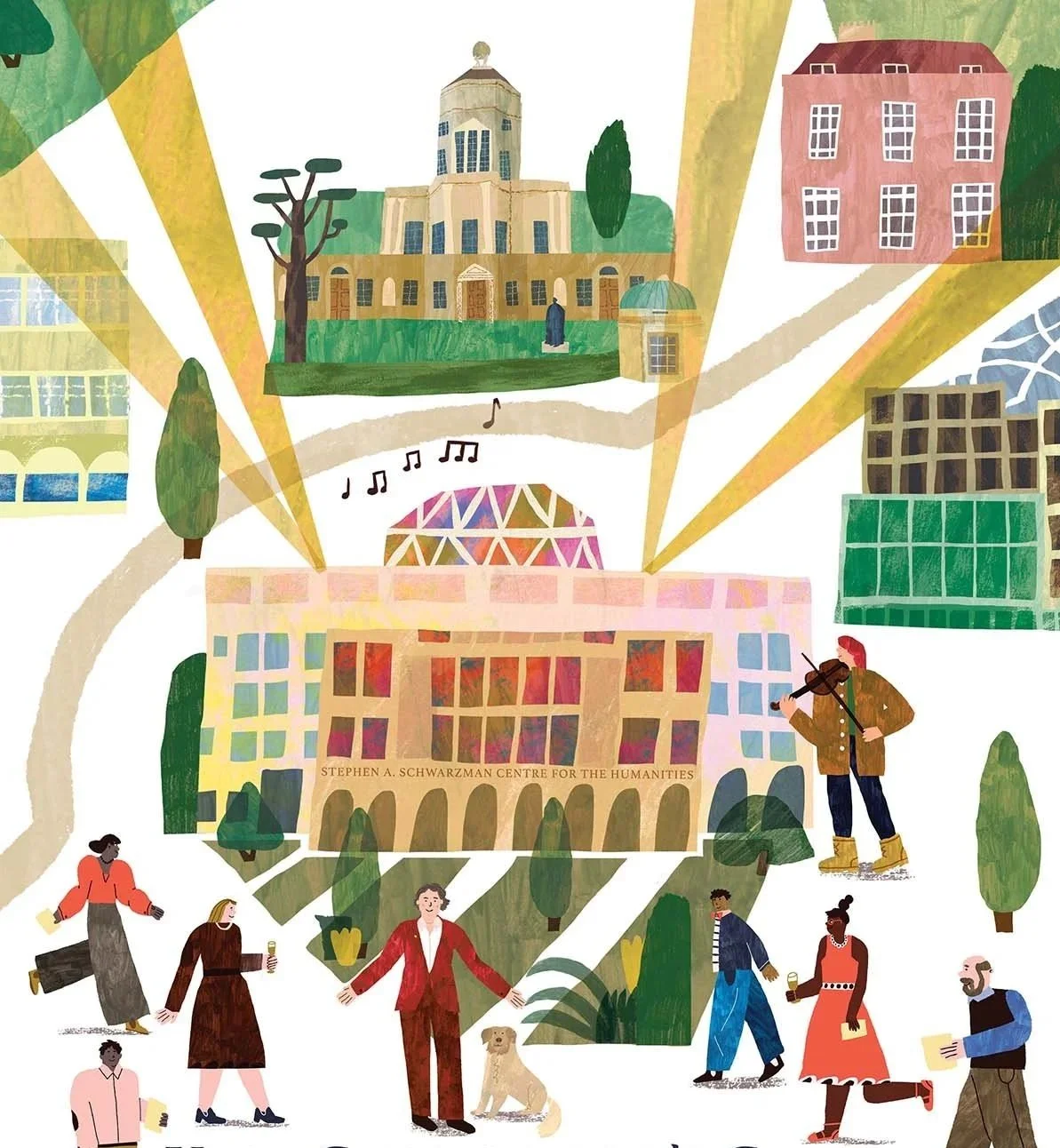
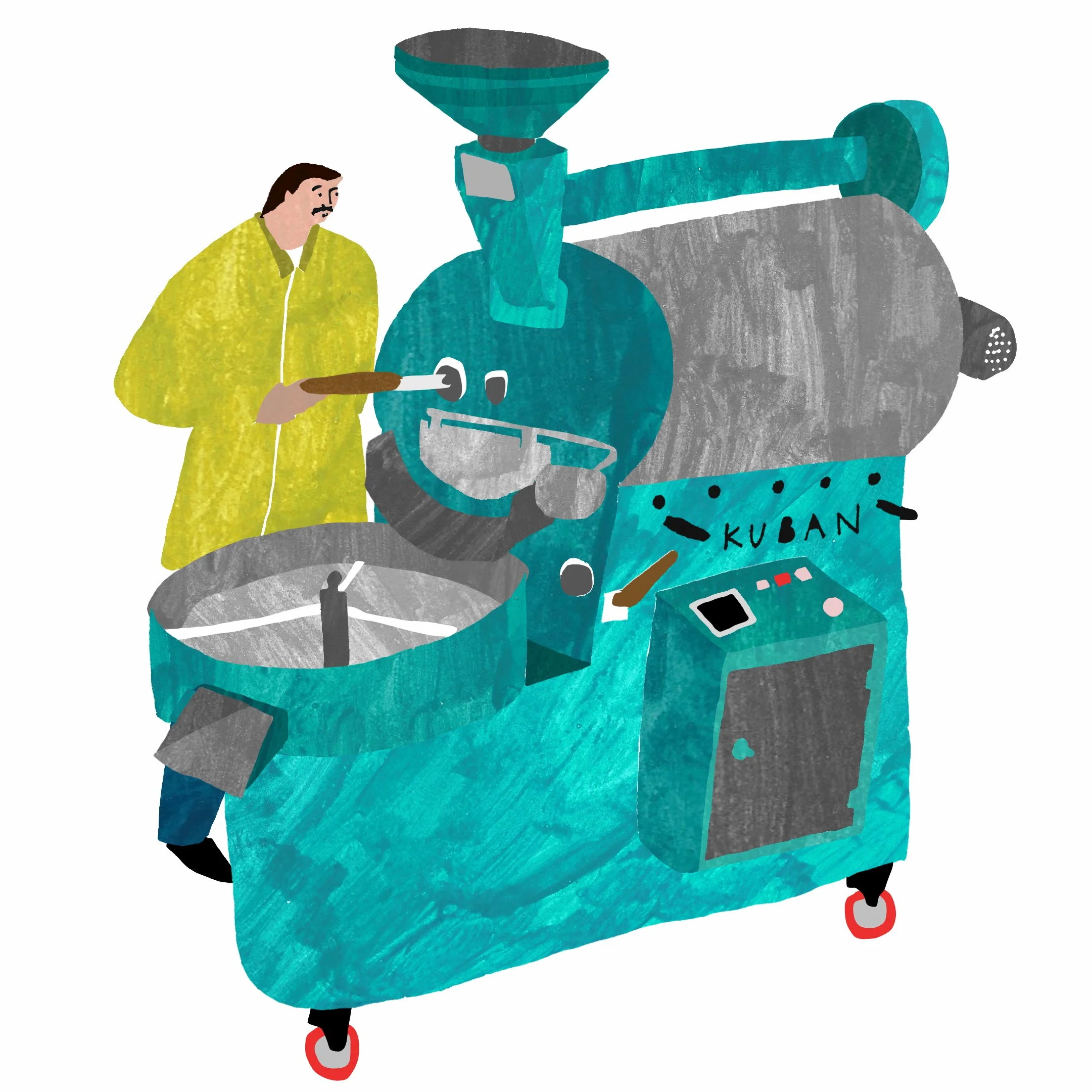
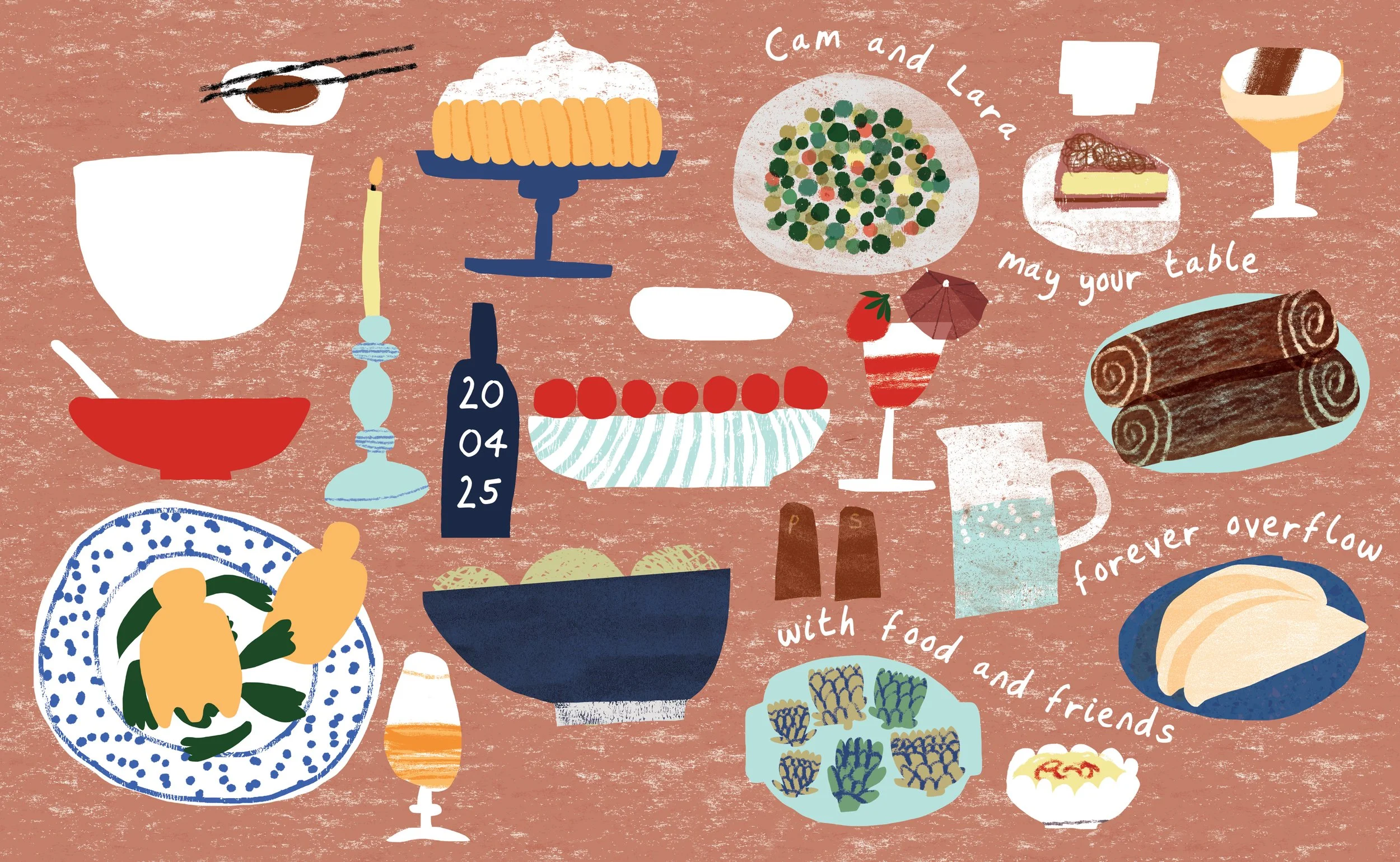
ExamplesL - R: Rugby Gallery Activity Sketchbook, Oxford University Invitation Design, Caffeine Project Coffee Roaster, Recipe Book Cover Design
AR-T
I recently started exploring the use of AR with the Meta Quest headset to scale up my mural designs.
As an artist and mum to a 2 year old, I am fascinated by your research into the Digital Society and would be proud to help bring understanding to a wide audience through art.
In my technician role I’m fascinated by, and encourage the students to explore, the combination of the analogue and digital worlds. This is something I’d bring into this project.
How I’d Approach this Commission
ContentI’m excited at the opportunity to explore the Digital Good’s research and work with the team to decide which information would be best featured within the artwork. From an initial explore of the work shared on your website, there are so many possibilities. I’m curious to understand more about digital healthcare. I have a partner and friends working as Drs for the NHS and find the idea of their jobs being taken by ai a real threat. I’m curious to learn more about your research into defining what ‘good’ looks like in a digital society and I was particularly drawn to the work on sustainability. The report exploring children’s attitude’s to digital good/bad feels so important and also something close to home. I think that within the budget we could create work to cover many different topics.
FormatMy initial concept would be to create a series of ‘scenes’ which each represent one of the pieces of research, decided with the team, (if successful). The number of scenes could be extensive, these would be built to stand alone but also work as a whole in a long, wraparound artwork. It would allow the viewers to dip in and out of these ‘portals’, becoming part of mini conversations or scenes as they explore the artwork. I would use scale and composition to develop a scene that works as individual outcomes and as a whole. I have experience creating simple animations which I’d employ so that each scene had a small amount of movement. This would help to energise the artwork whilst adding some fun and action to the piece. I’d aim to keep a ‘hand drawn’ feel whilst making the work easy to comprehend.
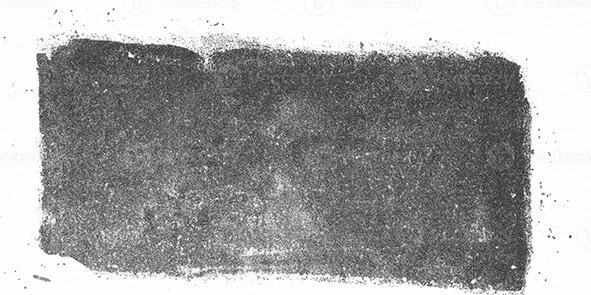
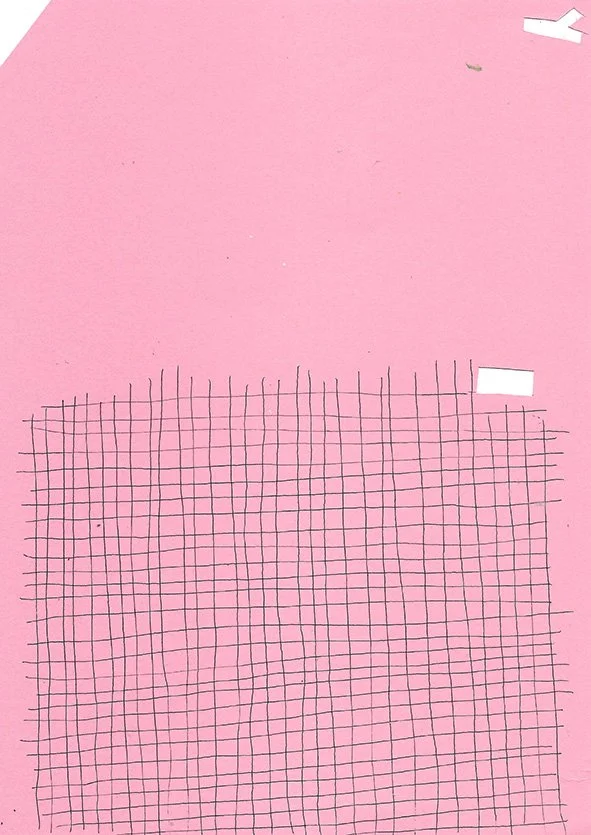
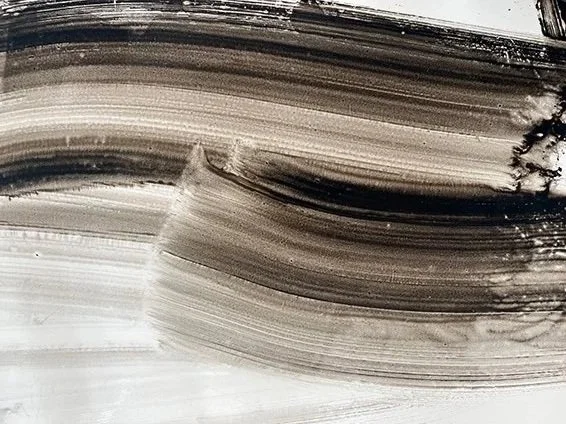
MaterialsI work with analogue and digital media. I like to create textures by hand with paint and ink and then manipulate them digitally to create an illustration. I propose making a series of new textures for the artwork using digital and analogue methods. This could be simple methods like potato stamping and scanning, or photographing ink under a microscope. I think this could add an extra layer of process and exploration to the project which echos the sentiment of the research.
OutcomesI am currently picturing a long wraparound image installed on panels with some elements projected digitally to show the simple animated elements. For the fold out zine, it would be fun to explore a long concertina design perhaps so the whole design can be viewed. It might be possible to share the design as a black and white outline drawing for children to colour in. It could also be possible to print information about the different methods of creating the textures for the artwork and some activities for people to try it at home.
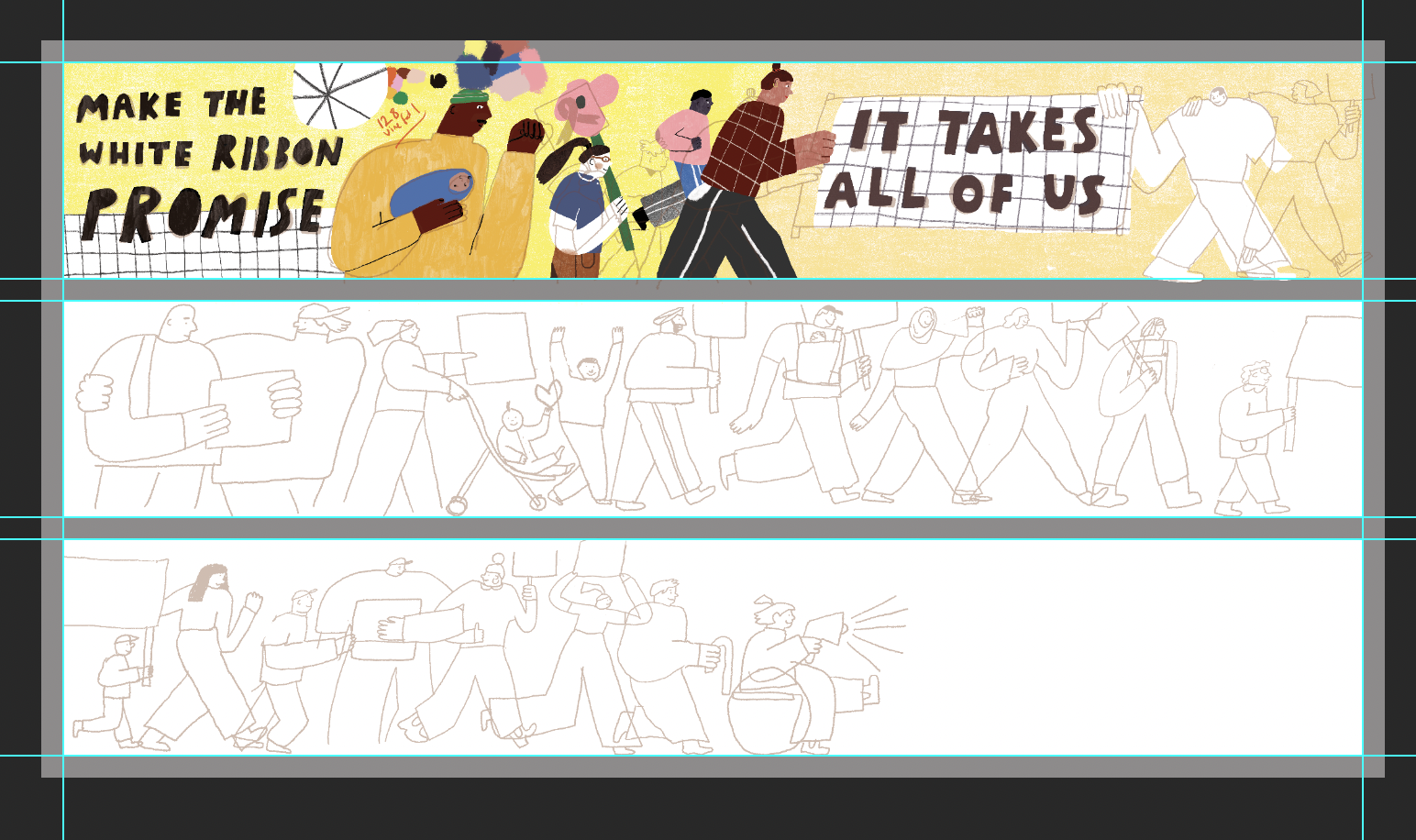
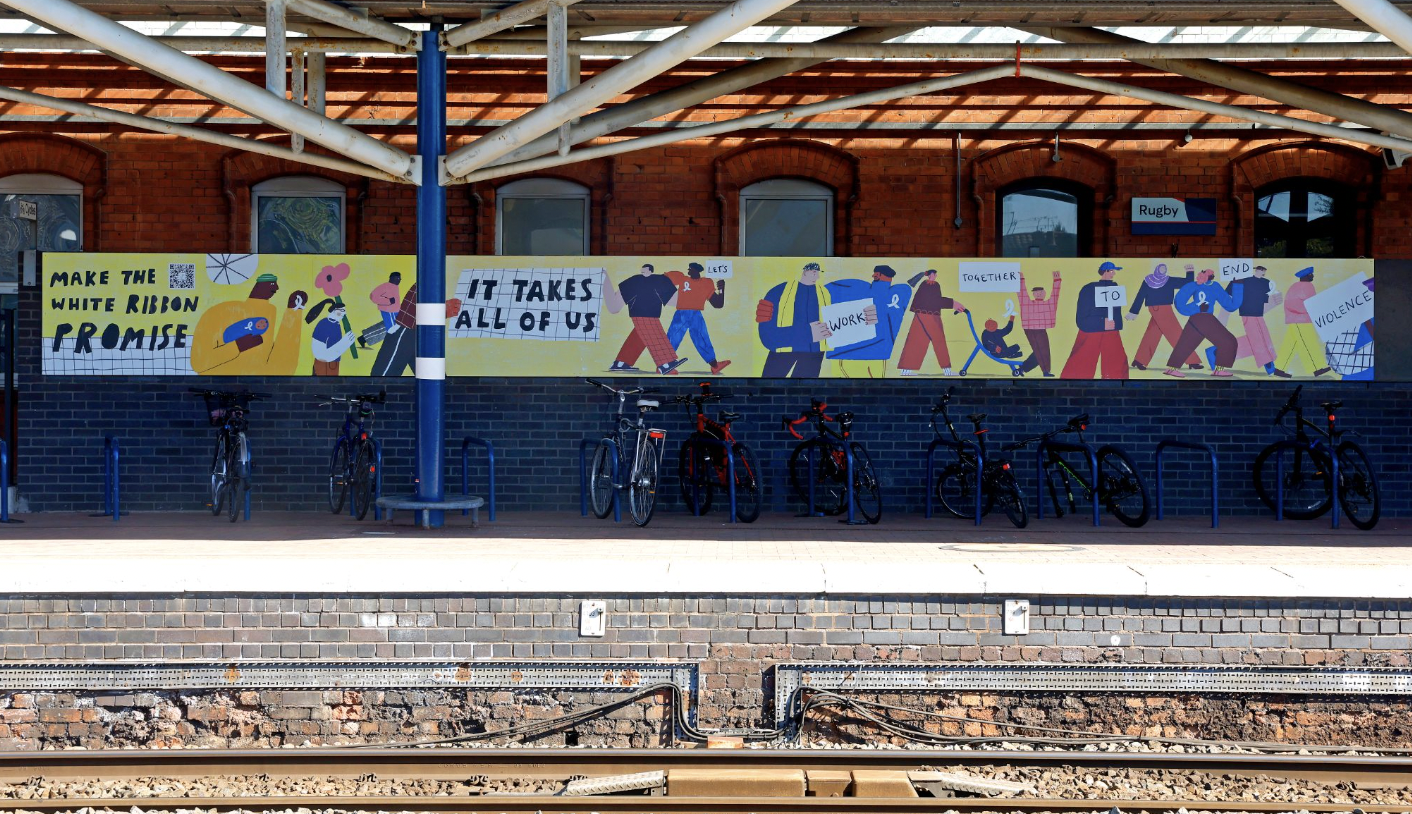
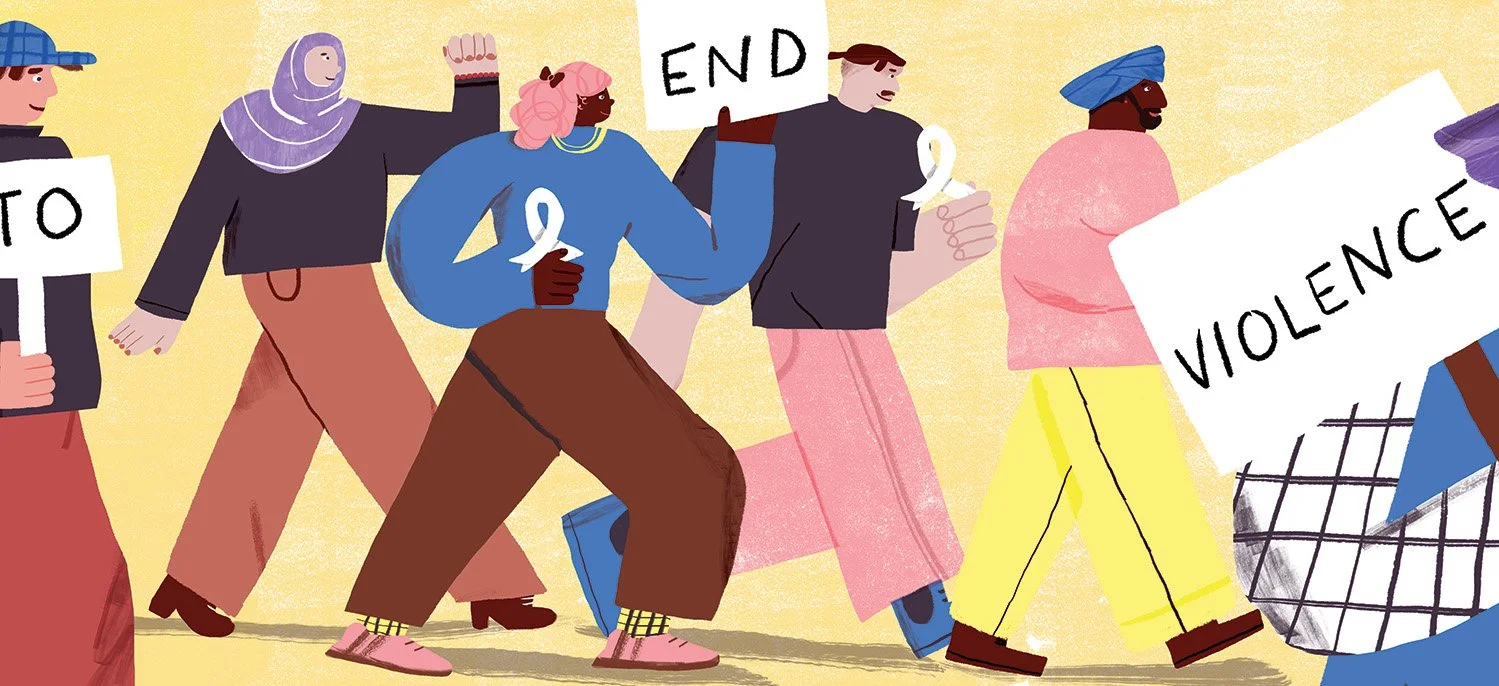
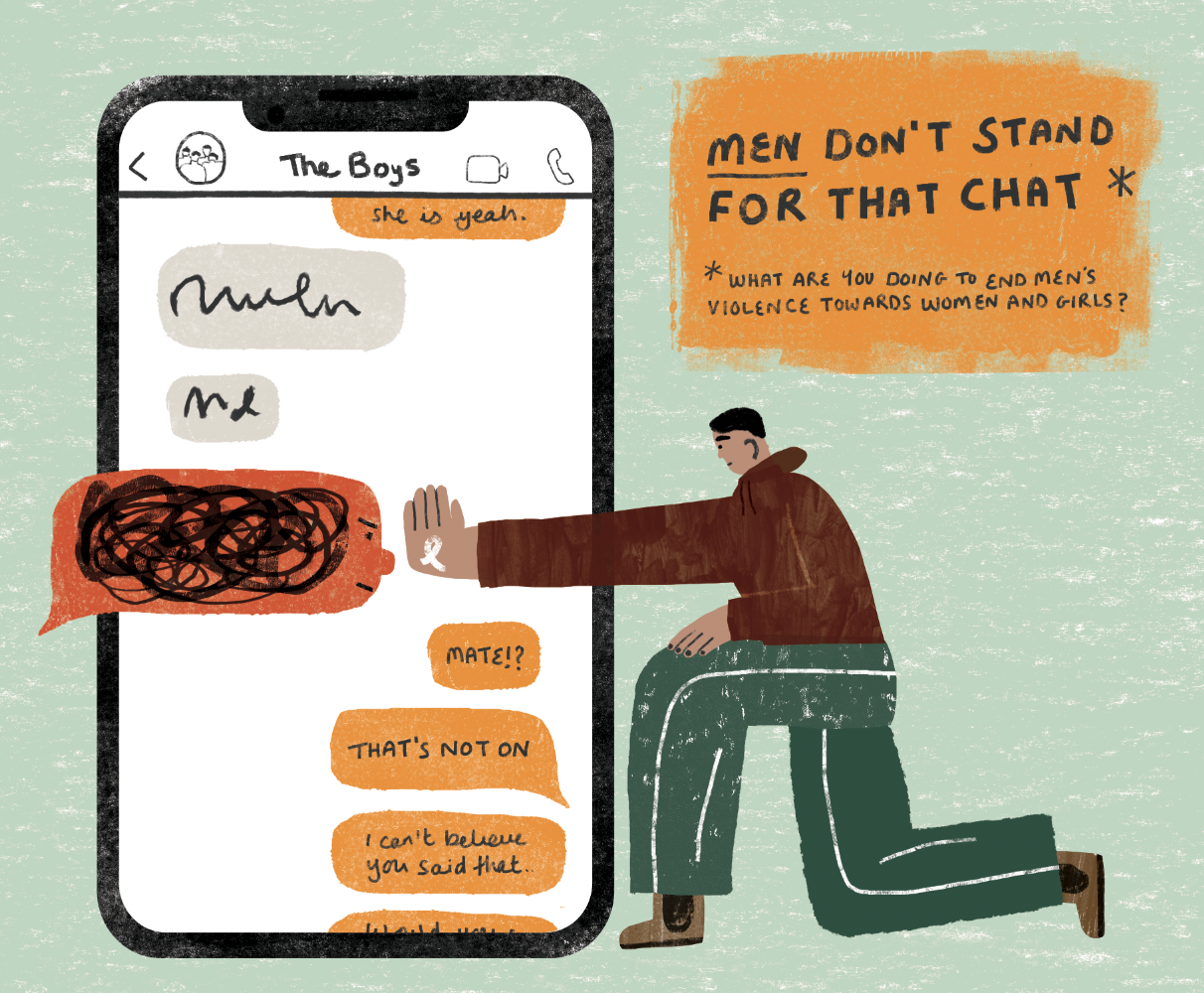
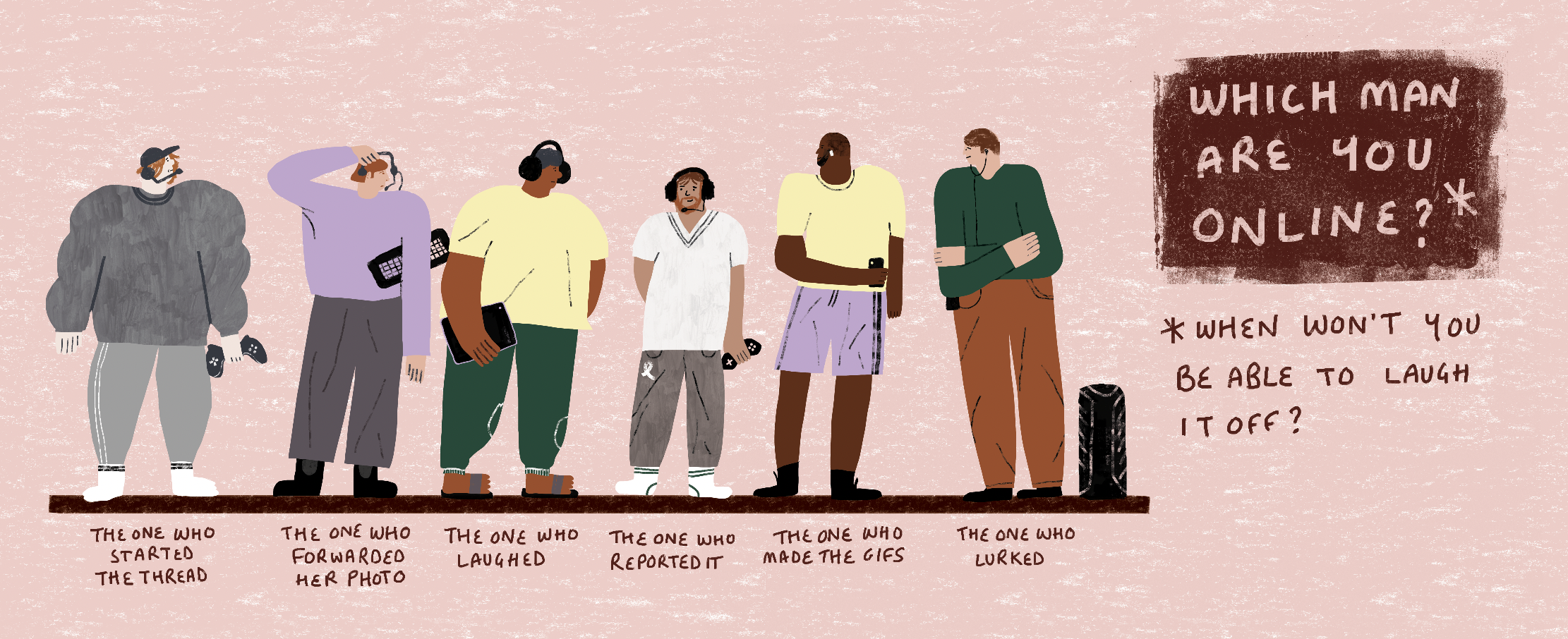
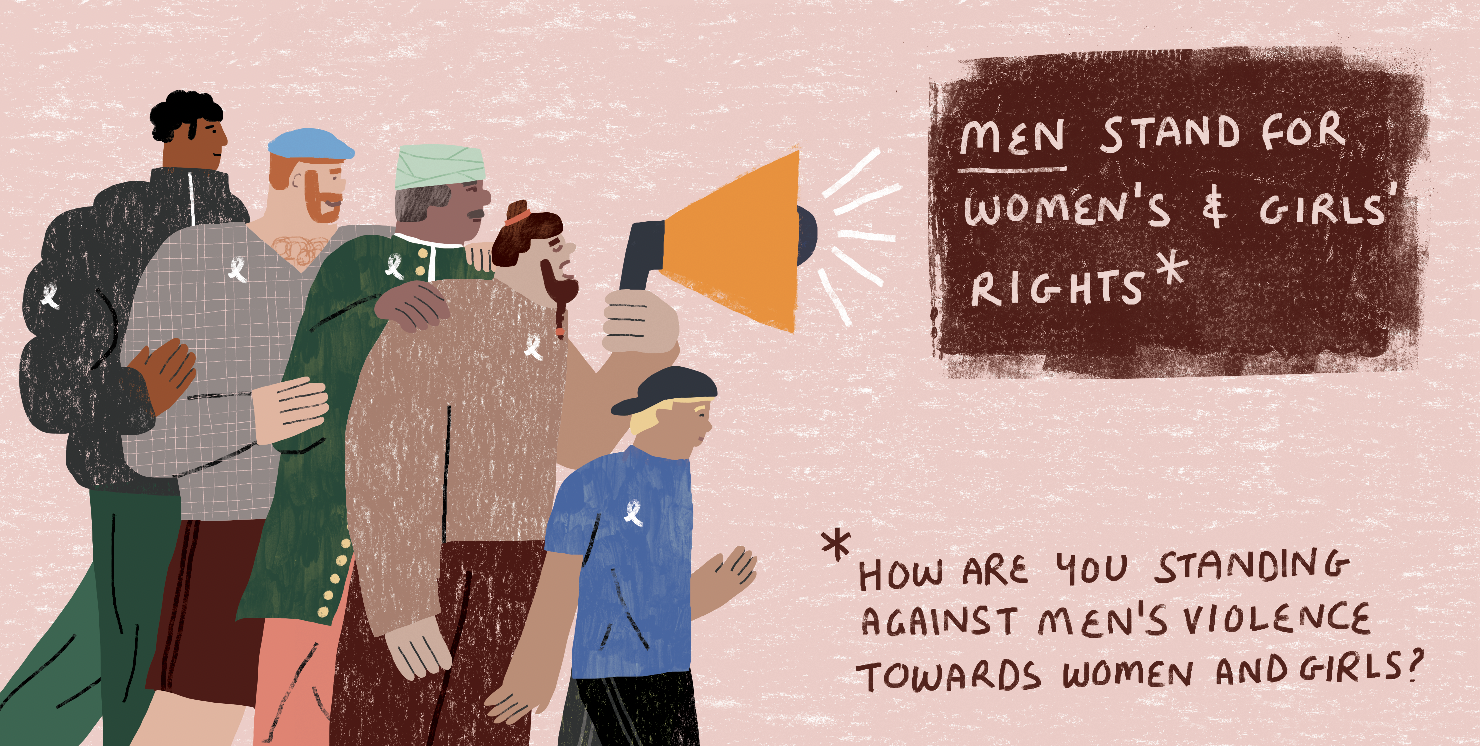
ExperienceI recently worked with The White Ribbon Campaign, West Midlands Trains, Heart of England Community Rail Partnership and Avanti to develop a series of illustrations for the White Ribbon campaign. Their mission is to end Mens’ violence toward Women and Girls. This required that complex issues were distilled and disseminated through accessible artwork, delivered to a broad audience to invite people in to the conversation. It was also shared by local MPs who championed the artwork. One piece was 18m x 1m in length and created using a combination of hand rendered textures as a digitally printed outcome. 3D cutouts of the characters were made on a laser cutter, painted and displayed at a local art gallery.

Over the last 3 years I have worked with Philip Seargeant, a writer and researcher from the Open University to create maps to support his historical research. Philip describes how the maps bring “historical narratives to life, connecting ideas, people, and places in a way that invites exploration and engagement. We wanted the visual representation to provide an artistic but also accessible informative experience, demonstrating how a varied and interesting heritage can be understood through the streets of a city and the people – and ideas – that lived there.”
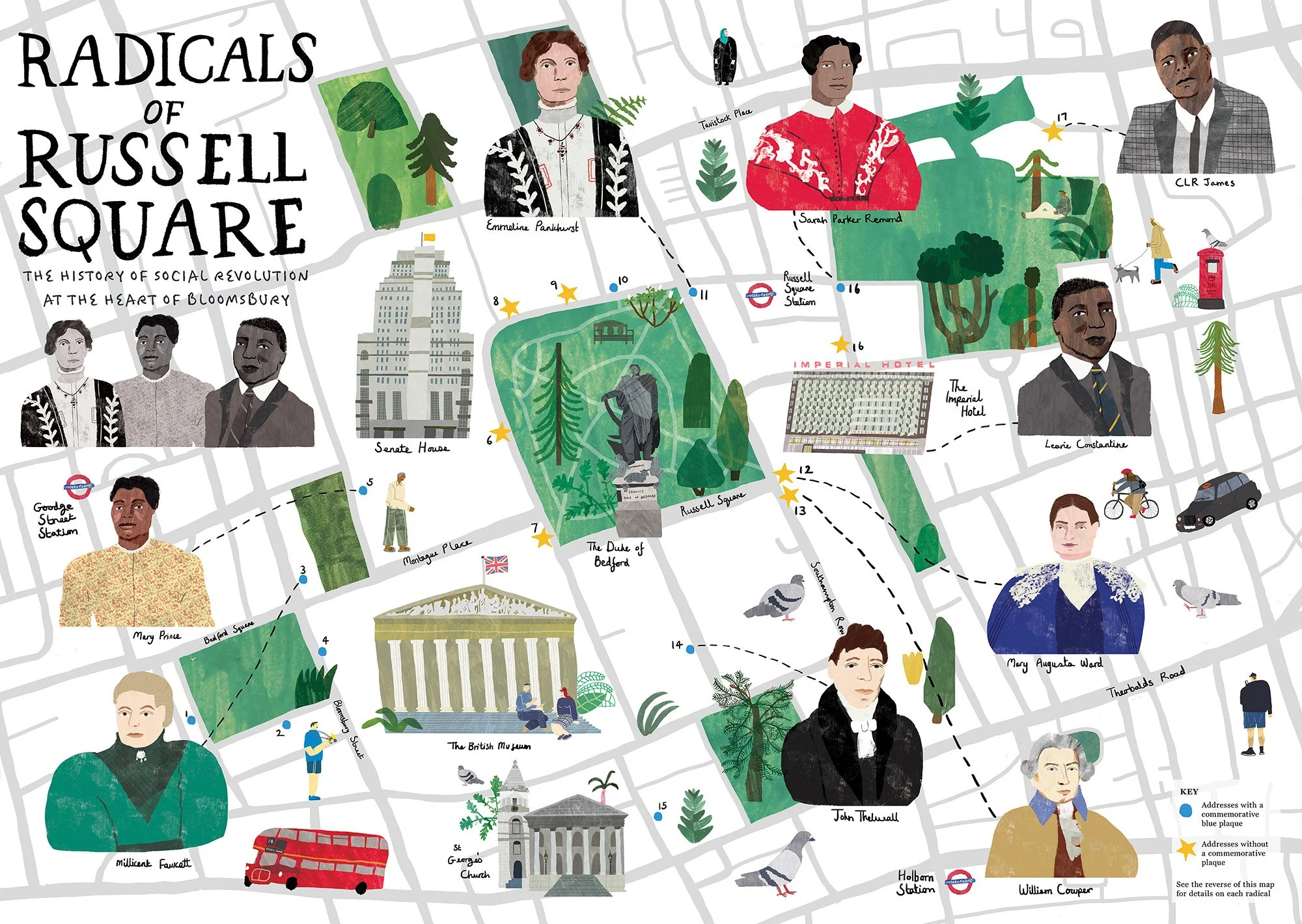
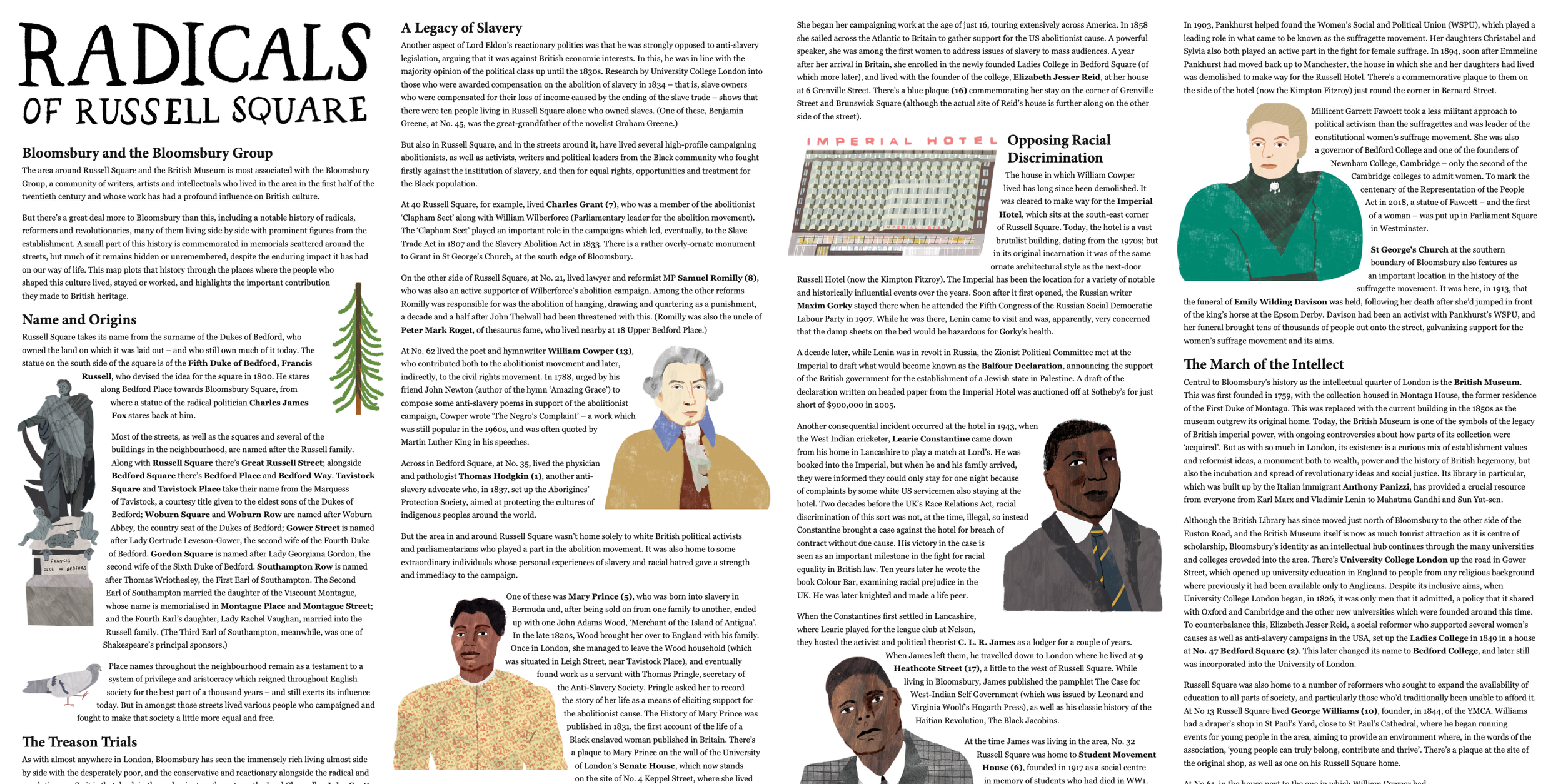
This map was printed on A2 paper and folded like a traditional OS map to give a feeling of entering the World we created.
My TexturesYou can see many of these in the map example above. For the Digital Good project I’d like to explore making new textures which connect to the research.
L - R: Made with ink and foam stamp, drawn lines on card, the ink spill (I got up from my desk with my headphone cable still attached and have since moved wireless because this was an all too common occurrence), blue gouache.
Thank you for reading this page. I made it to share my approach to the Digital Good Artist Project. I’d also recommend clicking some the links to my illustration and mural art in the menu :)
Emily Kaye Marlowe@ emilykayeillustration